Breathing New Life into Old School Spirit: Why Modern Developers Should Care About Usenet
Remember the era before streaming giants and ubiquitous torrents? Those times when the internet felt like a vast decentralized village, and information traveled via protocols that many today consider "digital fossils." One such artifact is Usenet. But don't scroll past just yet: while Netflix keeps raising prices and torrent trackers struggle with blocks, Usenet is experiencing a kind of renaissance, having transformed into a fast, secure, and incredibly deep data repository.
Recently I stumbled upon the usenet-guide repository, which serves as the ultimate guide to this technology. Despite being written in German, its structure and recommendations are the gold standard for anyone wanting to understand how the "internet within the internet" works in 2026.
What Is Usenet and Why It's Not Torrents
In short, Usenet is a distributed discussion group system that originated back in the 1980s. But for us today, what's important is that it's a vast network of servers that exchange files with each other.
Unlike P2P (torrents), where you depend on "seeders" (other users), in Usenet you download data directly from the provider's servers. Familiar situation: you found a rare old series on torrents, but there are 0 seeders? In Usenet, files can be stored on servers for up to 15 years and downloaded at your maximum connection speed at any time of day or night.
Why Developers Should Look Into This Repository
The PCJones project is not just a "click here" instruction manual. It's a roadmap for automating your home media lab. If you love Docker, microservices, and automating routine tasks, this guide will show you how to connect disparate tools into a unified ecosystem.
Key Components of Modern Usenet Infrastructure
The author highlights several critically important tools that every modern "digital archivist" should know:
- SABnzbd: The main workhorse. It's an open-source downloader with a web interface that turns encrypted chunks of text from newsgroups back into your files. It's cross-platform and containerizes perfectly in Docker.
- Indexer: Since searching within Usenet itself is quite a challenge, there are special search engines. The guide details options ranging from free to elite closed communities.
- Automation (Radarr/Sonarr): These are the tools that make your "hardware" work for you. They monitor new releases on their own, find them on indexers, and send them to SABnzbd.
Technical Magic Under the Hood
It's interesting to observe how an old protocol has adapted to modern times. Files in Usenet are split into thousands of tiny text messages. To reassemble them, NZB files are used — essentially "treasure maps" that tell your client which specific pieces of text to retrieve from the servers.
The guide pays attention to security: the author emphasizes using SSL connections with provider servers. This makes your traffic invisible to your Internet Service Provider (ISP), eliminating the need for a VPN to protect privacy during downloads.
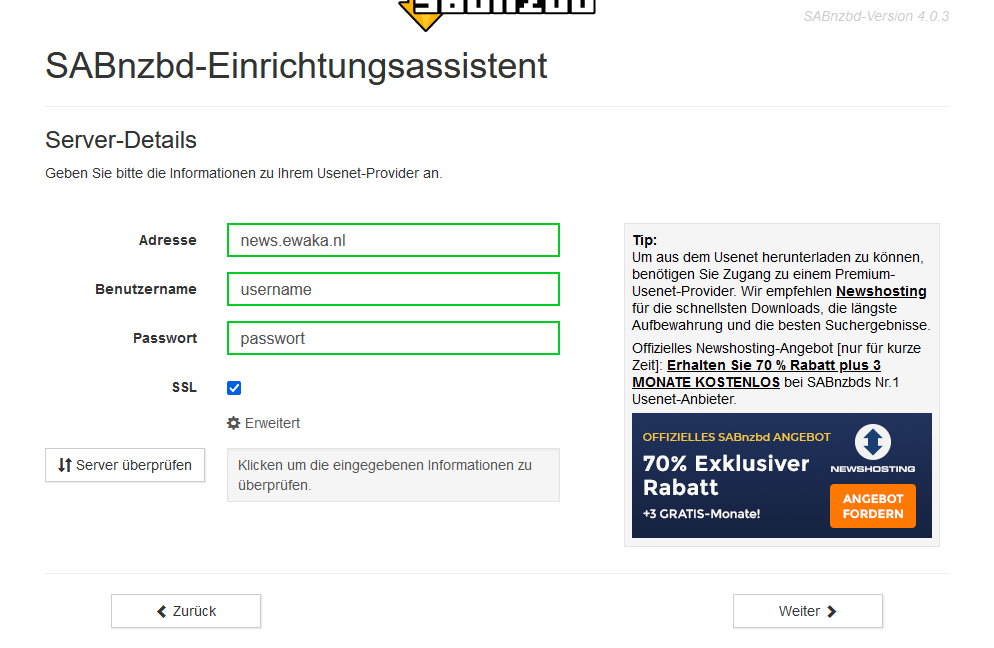 SSL configuration process in SABnzbd — the foundation for secure operation.
Practical Case: From Manual Search to Full Autonomy
The project author takes readers by the hand: from choosing a provider (for example, Ewaka with their phenomenal 15-year file retention) to setting up your first downloads.
What a typical workflow looks like according to this guide:
- You install SABnzbd (preferably in Docker).
- Register with an indexer (for example, SceneNZBs for European content enthusiasts).
- Configure API keys between services.
- Add desired content to Jellyseerr (a beautiful UI for requests).
- The system finds, downloads, verifies integrity, and organizes files into folders for your media server like Jellyfin.
Why This Guide Is Relevant Right Now
The repository contains an important manifesto against streaming via Usenet. The author argues that turning the technology into a "money-making machine" for mass consumers will attract unwanted attention from major copyright holders and could destroy the fragile decentralized ecosystem that has thrived for decades. This is the stance of the "old guard" who value the technology for its reliability and privacy, not for the "one-click" convenience for everyone.
Is It Worth Studying the Project
If you:
- Are tired of content disappearing from streaming services due to licensing;
- Want to build your own fault-tolerant data storage system;
- Love configuring complex software stacks (Self-hosting);
- Value high download speeds that are only limited by your internet plan.
...then usenet-guide will be an excellent starting point for you. Even if you don't know German, the indexer comparison tables and SABnzbd configuration screenshots will be understandable to any engineer.
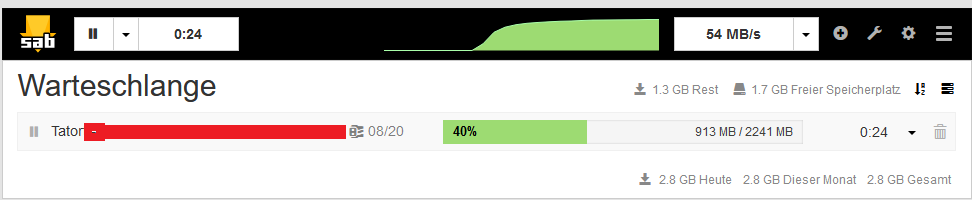 SABnzbd interface: simple, effective, and without unnecessary bells and whistles.
Usenet is not the past. It's an alternative present for those who prefer to own their data rather than rent access to it. The PCJones project is an excellent reminder that old protocols, when properly configured, can give any modern cloud a run for its money. At the very least, it's a great excuse to spin up a couple of new containers this weekend and see how deep this rabbit hole goes.
関連プロジェクト