MeterSphere — When Testing Stops Being a Bottleneck
Are you familiar with the situation when a release is delayed due to an endless testing cycle? When routine tasks take too much time, and automation seems complicated and fragmented? I often encounter teams using dozens of different tools that don't integrate well with each other, turning the testing process into a real quest. It seems I have found something that can change your approach to testing.
What Is This Beast and Who Needs It?
Today we'll talk about MeterSphere — an open-source next-generation continuous testing tool that promises to make your life easier and the testing process more efficient. Forget about scattered utilities and endless context switching. MeterSphere aims to become a single hub for all your testing activities, from test case management to API automation and even CI/CD integration.

This project will be especially interesting for development and QA teams striving for maximum automation, centralized testing processes, and wanting to eliminate the routine associated with managing test documentation and test runs.
Key Features: Test Smarter, Not Longer
MeterSphere doesn't just bundle different functions under one roof — it offers them in a well-thought-out and integrated way. Let's look at the most interesting ones.
1. AI Assistant: Your Smart Helper in Testing
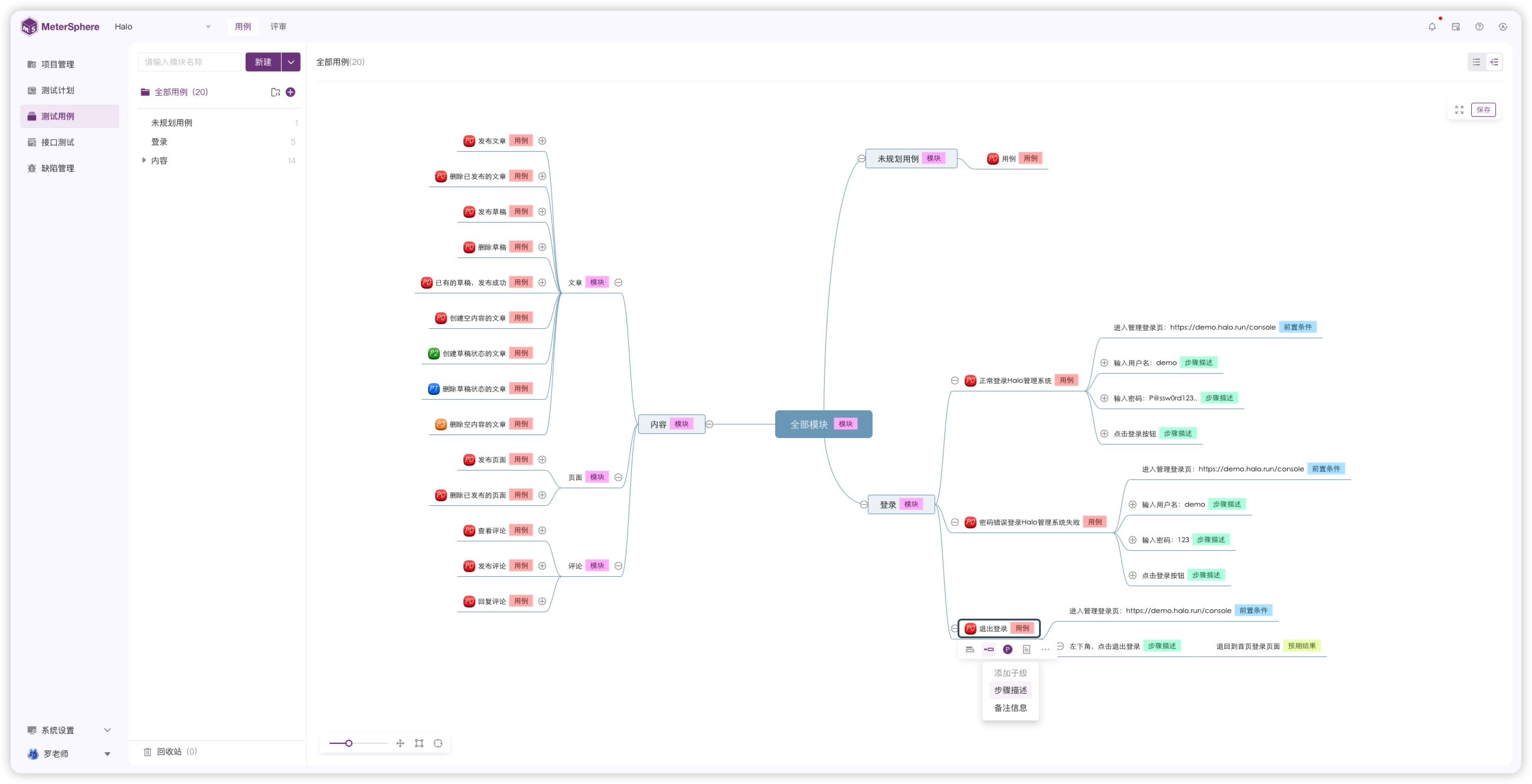
Imagine having a smart assistant that generates test cases and scenarios for APIs. MeterSphere offers exactly this, using artificial intelligence capabilities to accelerate the creation of test documentation and tests themselves. This isn't just a buzzword — it's a real tool that can significantly reduce preparation time, especially for routine or template-based tasks.
2. Comprehensive Test Management: Goodbye, TestLink!
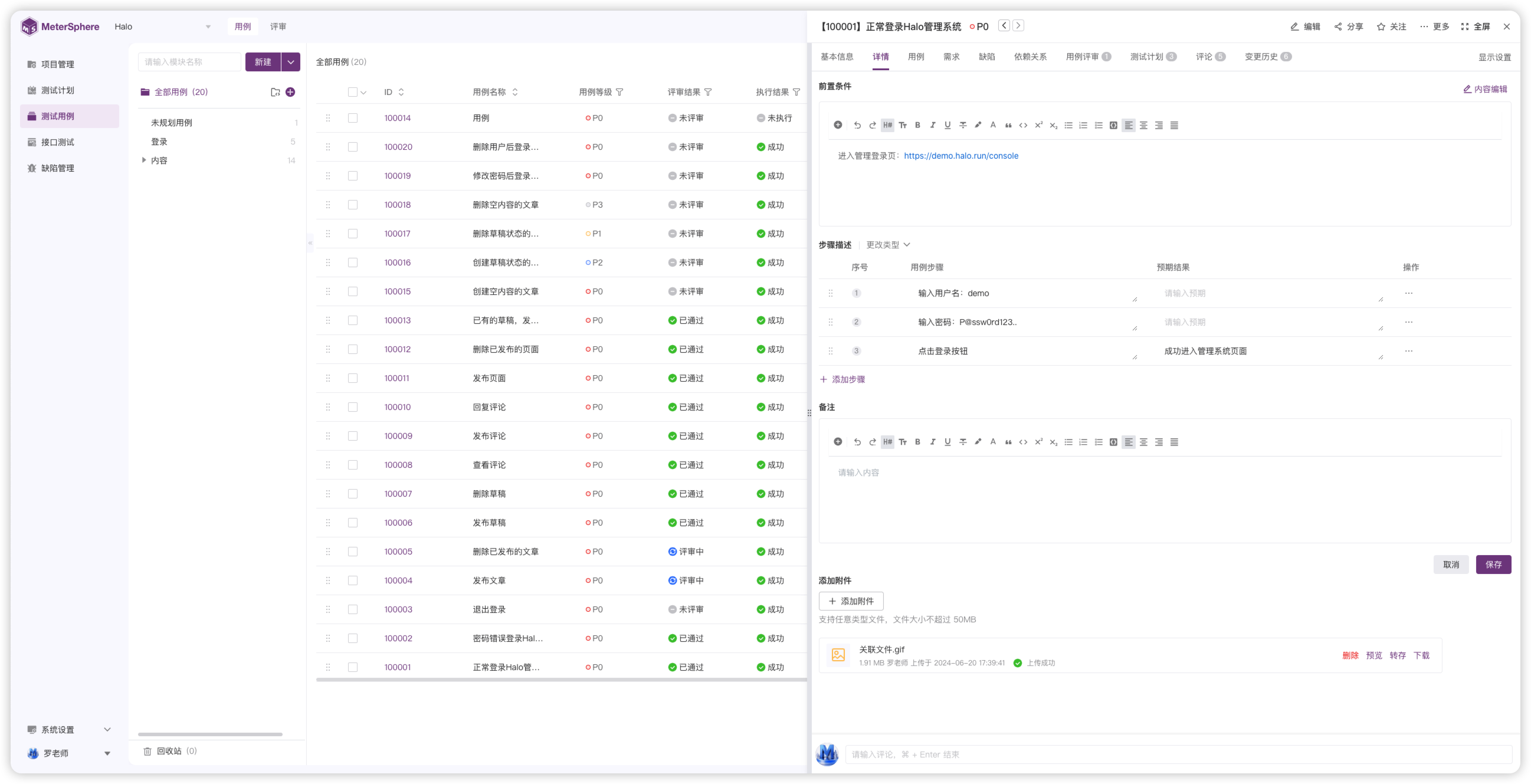
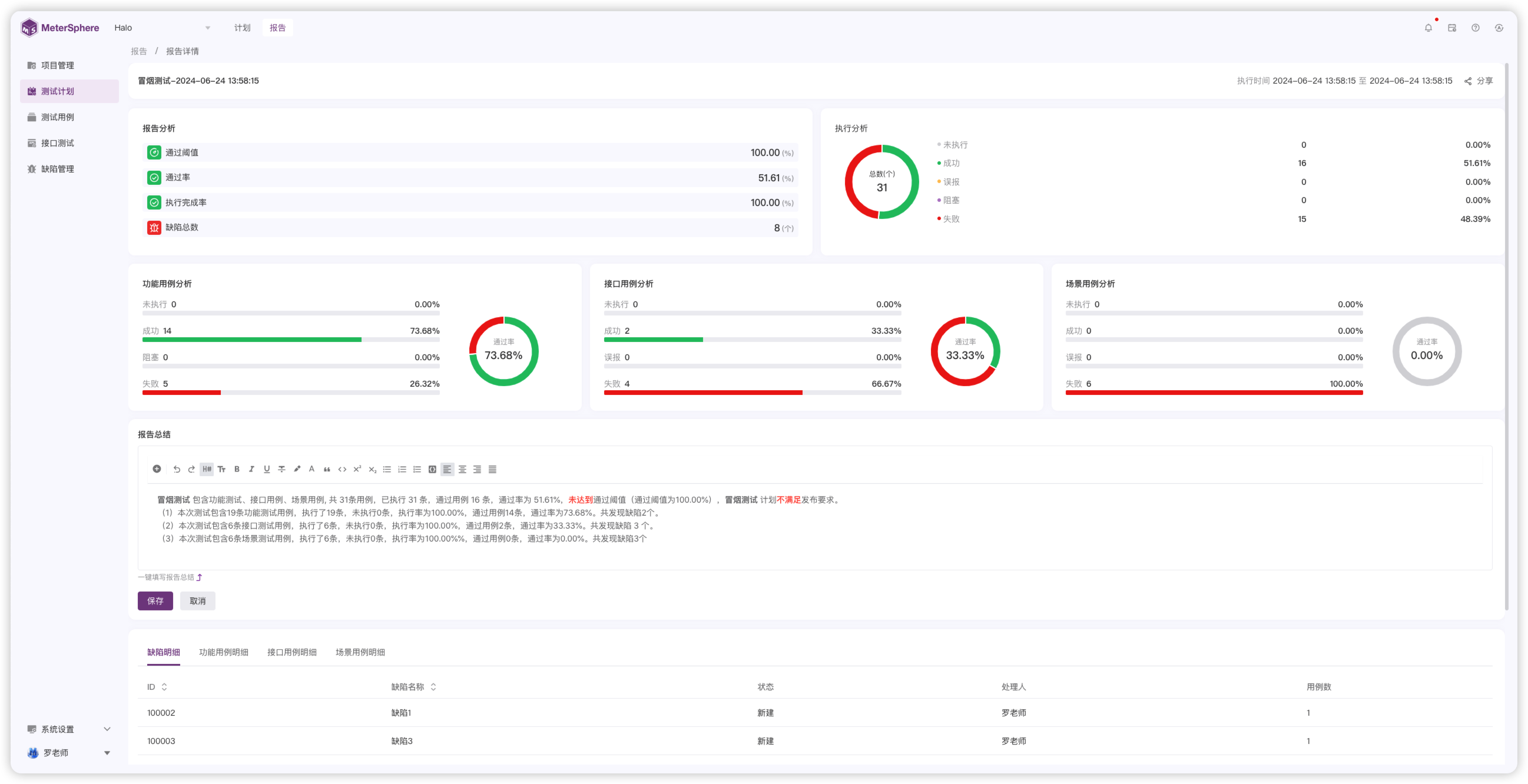
If you're tired of TestLink and its alternatives, MeterSphere will feel like a breath of fresh air. It covers the entire testing lifecycle: from writing test cases and planning test runs to defect management and report generation. All in one place, with an intuitive interface. This allows the team to have a single source of truth for all test artifacts and easily track progress.
3. Flexible API Testing: JMeter's Power and Postman's Simplicity
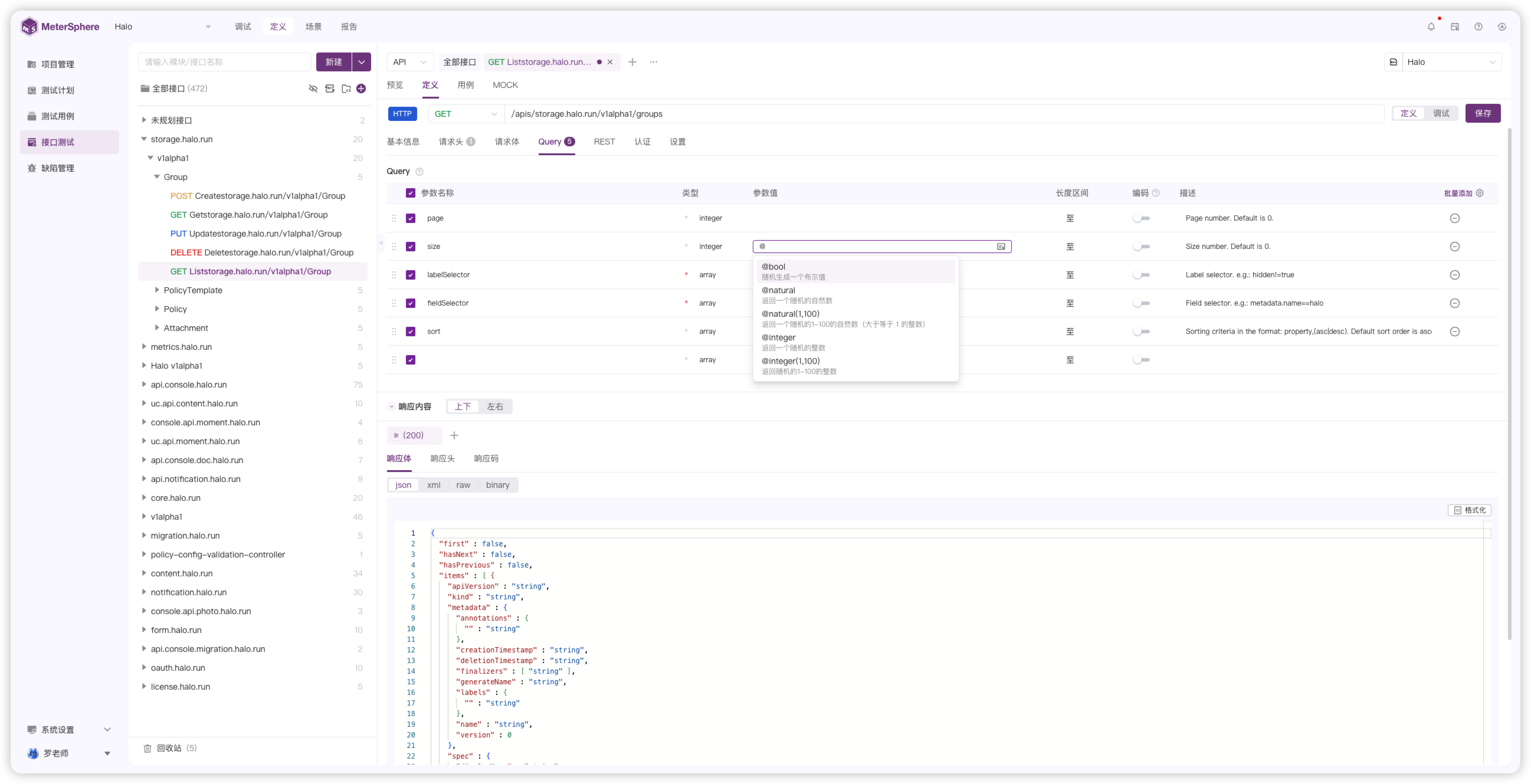
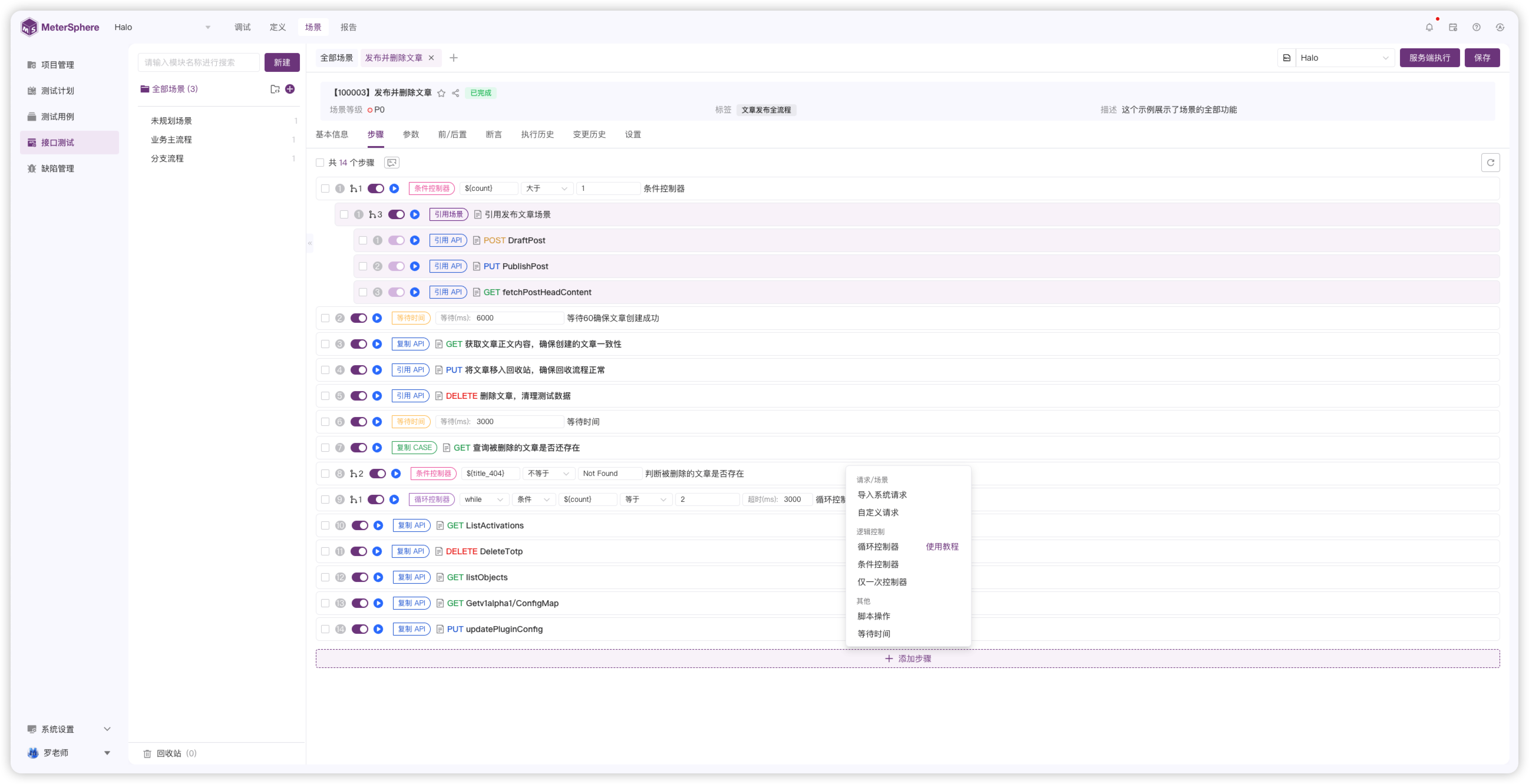
MeterSphere combines the best of Postman (ease of use) and JMeter (flexibility and power). You can:
- Debug APIs in real time.
- Define specifications and document them.
- Mock responses for independent testing.
- Create complex automation scenarios for integration and load testing.
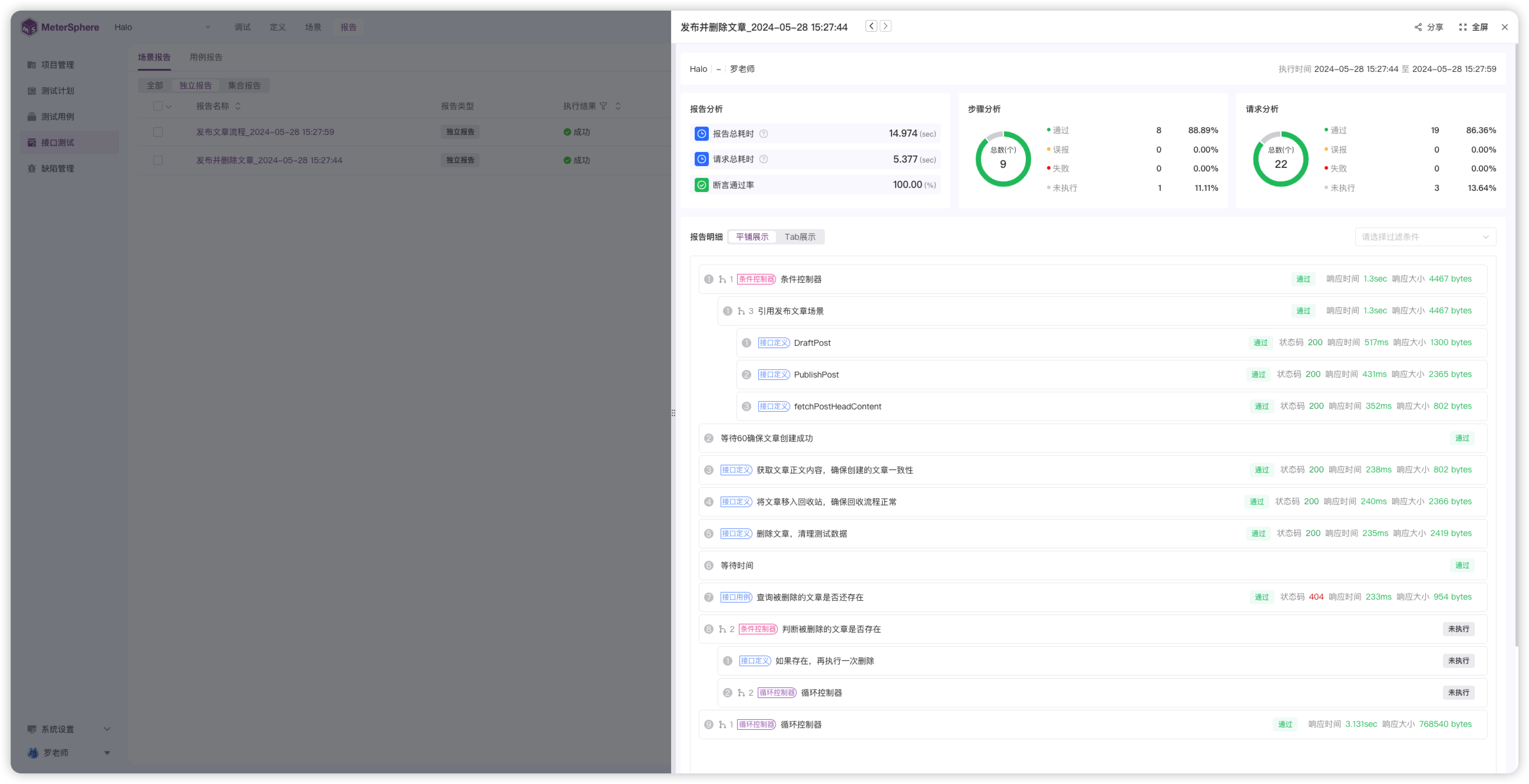
- Get detailed execution reports.
This is a real Swiss Army knife for working with APIs, allowing you to cover even the most complex microservice architectures with tests.
4. Teamwork Without Borders
The project is designed with teamwork in mind, offering a hierarchical structure of "system-organization-project". This makes it easy to distribute tasks, track progress, and collaborate on test artifacts, forgetting about "testing on a single machine". In my practice, the lack of convenient collaboration tools often becomes a stumbling block for effective testing in large teams. MeterSphere solves this problem.
5. Extensible Plugin Architecture: Integrate Anything
MeterSphere doesn't close in on itself. Thanks to an extensive plugin system, you can extend its functionality and integrate it with your DevOps pipeline. There are ready-made plugins for synchronization with popular task management systems like TAPD, Jira, ZenTao, as well as for Jenkins integration. Additionally, various databases (MySQL, Oracle, SQLite, MS SQL Server) and protocols (TCP, Dubbo, MQTT) are supported, making it a universal solution.
 |
 |
 |
 |
 |
 |
 |
 |
Technical Details: What's Under the Hood?
Under the hood, MeterSphere uses proven and reliable technologies. The backend is built on Spring Boot, and the frontend uses Vue.js, ensuring a modern and responsive user interface. MySQL, Kafka, MinIO, and Redis are used as middleware, indicating a serious approach to scalability and performance. And for running tests, it uses the well-familiar JMeter. All this power is conveniently packaged in Docker containers, which significantly simplifies deployment and management.
Practical Application: How to Get Started and What to Do With It?
How to get started? Couldn't be simpler! One docker run and MeterSphere is ready to work. By the way, this is very convenient for quick start and local testing.
docker run -d -p 8081:8081 --name=metersphere -v ~/.metersphere/data:/opt/metersphere/data metersphere/metersphere-ce-allinone

# Пользователь: admin
# Пароль: metersphere
You can use MeterSphere to solve many tasks:
- API regression testing automation: Create scenarios and run them with every code change to ensure your product's stability.
- Manage all test cases: From functional to integration, in a single system, which significantly simplifies planning and reporting.
- Efficient team collaboration: Distribute tasks, track statuses, collaborate on defects, increasing process transparency.
- Seamless CI/CD integration: Automatically run test plans in Jenkins or other CI/CD systems after each build, ensuring continuous feedback.
Conclusions: Is It Worth Trying?
MeterSphere is not just another testing tool. It's a comprehensive platform that strives to solve many pain points of modern testing, making it faster, smarter, and more integrated. In conditions where the speed of delivering a product to market plays a key role, such solutions become indispensable.
If you're looking for a way to organize your testing processes, accelerate releases, and give your team a powerful tool for collaboration, MeterSphere definitely deserves your attention. It will be especially useful for teams that already use Docker and strive for maximum automation and centralized testing. Try it, and perhaps testing will stop being a bottleneck for you!
Related projects