Hoe Stop Je Met Verdrinken in Redis-instanties en Ga Je Leven met CacheCloud
Stel je voor dat je werkt aan een groot project waarbij Redis niet alleen wordt gebruikt voor het cachen van een paar sessies, maar als een kritiek infrastructuur-knooppunt. Je hebt honderden instanties verspreid over verschillende servers, sommige in een cluster, sommige in Sentinel, en sommige zijn gewoon standalone nodes. Op een gegeven moment wordt monitoring een hel, worden versie-updates een nachtmerrie, en vereist schaling handmatige datamigratie en gebeden aan de uptime-goden.
Komt dit bekend voor? Dit is precies het probleem waar de mensen van Sohu TV tegenaan liepen. Om niet gek te worden, bouwden ze CacheCloud — een platform dat Redis-beheer omzet in een voorspelbaar, geautomatiseerd proces.
Wat Is Het Eigenlijk
CacheCloud is een open-source platform voor het beheren van de Redis-levenscyclus. In wezen is het je privé "cloud" configuratiescherm waar je met een paar klikken een nieuw cluster kunt implementeren, commandostatistieken kunt bekijken, of geheugen on-the-fly kunt uitbreiden.
Het project is niet nieuw — het is getest in de ruige omgeving van een Chinese videohostingservice. Hun interne gebruikscijfers zijn indrukwekkend: meer dan 48.000 Redis-instanties, 18 terabyte aan RAM onder beheer, en 80 miljard commands dagelijks verwerkt. Als een tool die schaal aankan, zal het zeker jouw project aankunnen.
Waarom Ontwikkelaars en Admins Dit Nodig Hebben
Meestal wordt Redis geconfigureerd via configs, CLI en automatisering scripts. CacheCloud biedt een andere aanpak — centralisatie. Hier is wat het standaard kan doen:
- Geautomatiseerde implementatie. Je hoeft hosts niet handmatig te initialiseren of Sentinel te configureren. Het platform regelt de installatie en configuratie van Standalone, Sentinel en Cluster modi.
- Slimme monitoring. Dit zijn niet alleen CPU-belastingsgrafieken. Het systeem verzamelt statistieken per applicatie, toont de langzaamste commands, en analyseert geheugengebruik.
- Elasticiteit. Als de cache vol raakt, kun je het cluster rechtstreeks via de interface uitbreiden. Het systeem zal automatisch slots en data herverdelen.
- Audit en beveiliging. Je kunt zien wie wanneer wijzigingen heeft aangebracht, welke applicaties toegang hebben tot specifieke nodes.
Hoe Het Onder De Motorkap Werkt
De projectarchitectuur bestaat uit verschillende lagen. In het centrum staat de web management interface (geschreven in Java/Spring), die communiceert met agents op doelmachines.
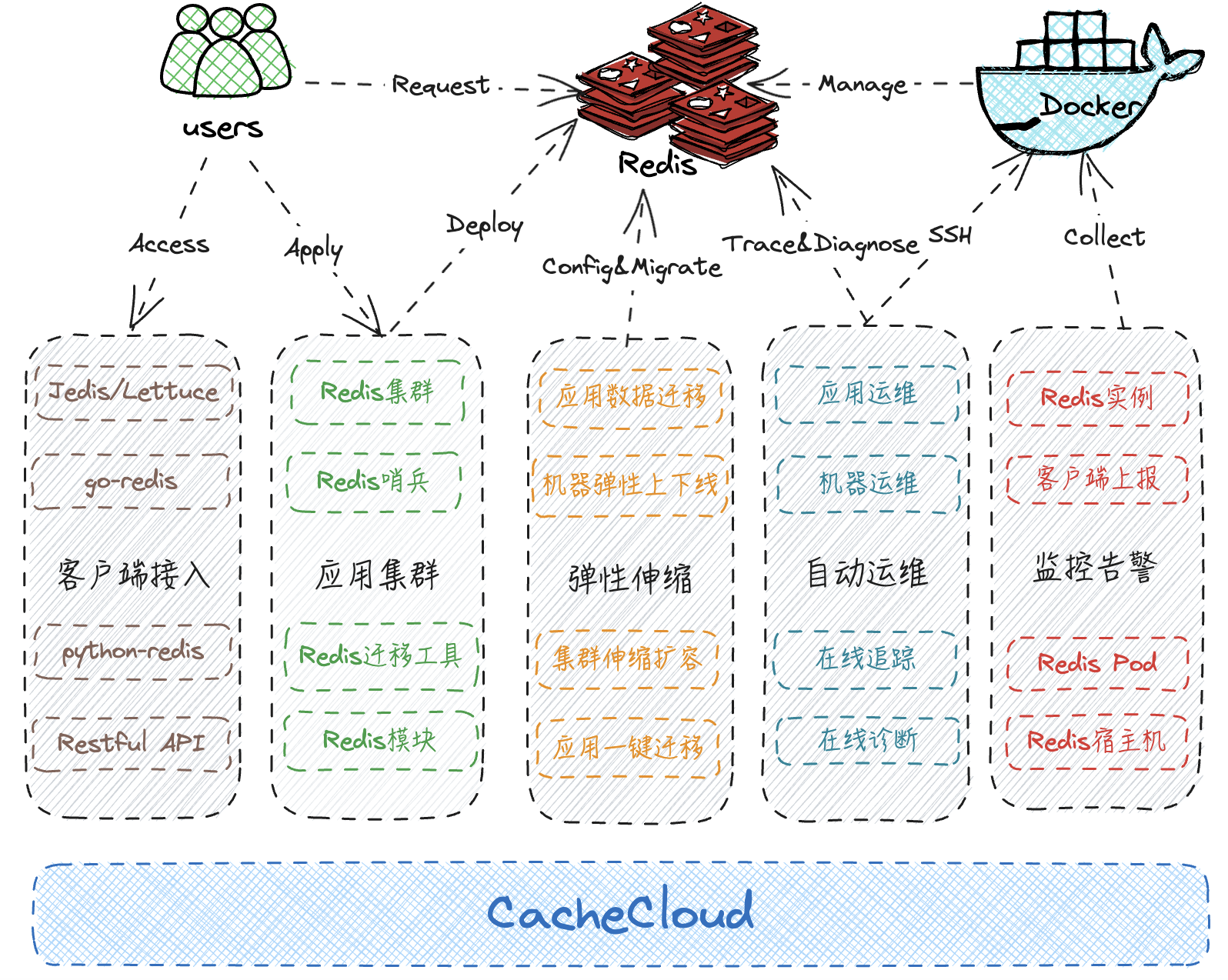
Interessant is dat de auteurs veel aandacht hebben besteed aan de client-side. Ze bieden hun eigen SDK's (gebaseerd op Jedis en Lettuce), die integreren met het platform. Hiermee kun je statistieken niet alleen aan de server-side bekijken, maar ook aan de applicatie-side: latenties, verbindingsfouten en meer.
Wie Zou Het Moeten Proberen
Ik zou niet aanbevelen om CacheCloud in een project te slepen met maar twee Redis-instanties — de overhead van het onderhouden van het platform zelf zou de voordelen tenietdoen. Maar als je hebt:
- Meer dan 10-20 Redis-instanties.
- Gemixte architectuur (zowel clusters als standalone nodes).
- Een team dat gemakkelijke toegang tot metrics nodig heeft zonder direct op servers in te loggen.
- Een behoefte aan snelle schaling zonder downtime.
Dan zal dit project je veel hoofdpijn besparen.
Nuances en De Vlieg In De Soep
Het project komt uit China, en dat laat zijn sporen na. De hoofddocumentatie in de Wiki is vaak in het Chinees, hoewel er een Engelse versie van de README in de repository staat. De interface kan op sommige plaatsen wat specifiek aanvoelen, maar het is functioneel.
Een ander punt: CacheCloud is vrij gekoppeld aan zijn ecosysteem. Om het maximale voordeel te krijgen (zoals gedetailleerde client-side statistieken), moet je hun wrappers over de standaard Redis-bibliotheken gebruiken.
Hoe Te Beginnen
De gemakkelijkste manier om het systeem te leren kennen is door hun demo-instantie te bekijken (link staat in de README) of het project lokaal te deployen. Je hebt Java 8+, MySQL voor het opslaan van metadata en Maven voor het bouwen nodig.
De quick start-instructies zijn vrij gedetailleerd:
- Initialiseer de database met scripts uit de
scriptfolder. - Configureer de databaseverbindingsinstellingen.
- Bouw het project met
mvn clean package.
CacheCloud is een krachtige all-in-one oplossing voor degenen die handmatig cache-beheer ontgroeid zijn. Het overbrugt de kloof tussen "gewoon Redis" en "cloud Redis als een service" (DBaaS), waardoor je je eigen betrouwbare opslag kunt bouwen. Als je genoeg hebt van routinematige cache-onderhoudstaken, is dit project zeker de moeite waard om een avond aan te besteden om de details te bekijken.
Het project heeft meer dan 9.000 sterren op GitHub, wat voor een gespecialiseerd administratietool een zeer serieus aantal is. Het is duidelijk dat de community het tool actief gebruikt, en de auteurs blijven het onderhouden ondanks de aanzienlijke leeftijd van het project.
Gerelateerde projecten