How to Touch the Radio Airwaves from 1 MHz to 6 GHz with Open-Source Projects
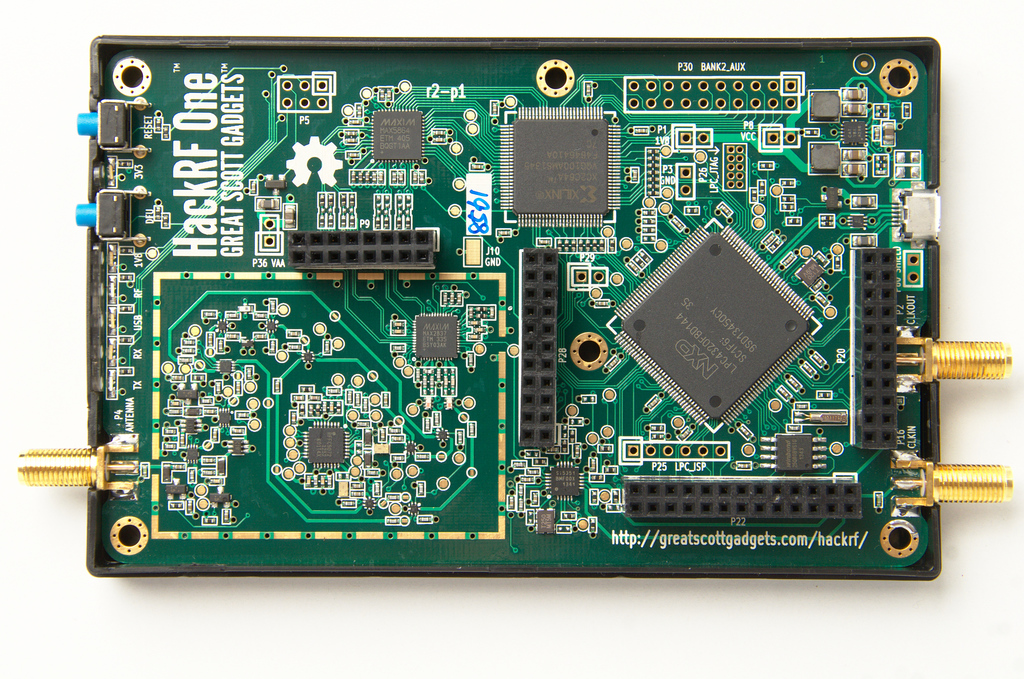
Most web developers are used to thinking about networks in terms of sockets and HTTP requests. But once data takes to the air via Wi-Fi, Bluetooth, or a gate remote, it becomes an ordinary electromagnetic wave. For a long time, exploring the radio spectrum remained the domain of specialists with hardware costing thousands of dollars.
The situation changed when Michael Ossmann and the Great Scott Gadgets team released HackRF. They created an affordable SDR platform (Software Defined Radio) and fully open-sourced its schematics, firmware, and source code.
What's in the Repository
The repository greatscottgadgets/hackrf brings together all the project work. It's a single entry point for working with both hardware and software.
Inside the source code you'll find:
- PCB layouts and component placement schematics
- Source code for the LPC43xx microcontroller firmware and FPGA plugins
- System C library
libhackrf - Set of console utilities for device management
- Sphinx documentation source files
The project is written in C. Documentation is built locally using Sphinx or LaTeX if you need a ready PDF file.
Diving into Code and Utilities
The software part of the project is divided into two levels. The first level is the library libhackrf. It handles low-level USB communication and provides a clean C API for receiving and transmitting samples. The second level is the console utilities, which is usually where people start.
For example, to capture a radio signal at 433.92 MHz, use the hackrf_transfer utility:
hackrf_transfer -r capture.raw -f 433920000 -s 8000000
This command records the airwaves at a sampling rate of 8 megasamples per second and saves quadrature (I/Q) samples to a binary file. This file can then be opened in GNU Radio or Universal Radio Hacker to analyze the protocol.
If you need to scan frequencies and find out which channels are occupied, the hackrf_sweep utility comes in handy:
hackrf_sweep -f 2400:2500 -l 32 -g 20
It quickly sweeps the synthesizer frequency and outputs signal power data. With it, you can easily build a spectrogram of a room in a matter of seconds.
Practical Value for a Programmer
Why should a programmer without a radio engineering background study the HackRF repository?
First, it's a practical example of how to architect software for hardware communication over USB. In the library libhackrf code, you can see how to handle real-time data streams without losing samples.
Second, the repository opens the door to reverse engineering. Using this platform, people analyze how radio remotes, tire pressure sensors, RFID tags, and satellite navigation signals work.
Third, the device lets you write your own communication protocols from scratch, using ready-made blocks in GNU Radio or your own C code.
Hardware and Its Features
The board has clear technical limitations. The operating mode is half-duplex. This means the transceiver can either receive or transmit a signal at any given moment. It cannot do both simultaneously.
The ADC resolution is 8 bits. For deep analysis of complex interference, this isn't enough, but it's perfectly sufficient for most engineering tasks. However, the operating frequency range covers from 1 MHz to 6 GHz without needing to swap modules.
Where to Start Learning
If you want to dive into the project, start with the official documentation on Read the Docs. If you wish, you can build it locally from the docs folder:
cd docs
make html
To build the PDF version on Ubuntu, you'll need to install LaTeX packages:
sudo apt install latexmk texlive-latex-extra
cd docs
make latexpdf
The project community lives on Discord and mailing lists. The developers honestly note in the README that handling support tickets can take up to two weeks. If you find a bug or want to contribute code, open an Issue on GitHub.
HackRF remains one of the most accessible and open bases for those who want to step beyond familiar software and work directly with the radio spectrum.
Related projects