NoScribe - Seu Estenógrafo Pessoal com IA
Quando foi a última vez que você precisou transcrever uma entrevista de uma hora? Para pesquisadores, jornalistas e sociólogos, esta é uma tarefa rotineira, mas necessária, que consome muito tempo. O NoScribe oferece uma solução elegante — um programa local para transcrição automática que converte fala em texto com surpreendente precisão.
O Que Há em Um Nome?
O autor do projeto, Kai Dröge, um sociólogo com formação em ciência da computação, brinca clevermente com o termo "scribe". Na gíria urbana, essa palavra se refere a "uma pessoa cuja existência miserável é reduzida à rotina acadêmica". O NoScribe foi projetado para nos libertar dessa rotina.
Principais Funcionalidades
- Autonomia completa — todos os cálculos acontecem no seu computador, sem envio de dados para a nuvem
- Suporte para 60 idiomas — do inglês e russo a variantes menos comuns
- Diarização de falantes — o sistema detecta automaticamente mudanças de interlocutor
- Editor conveniente para revisar e corrigir resultados
- Exportação para vários formatos — HTML, VTT (legendas), texto simples
Base Tecnológica
O NoScribe combina várias soluções poderosas de código aberto:
- Whisper by OpenAI — motor de reconhecimento de fala
- faster-whisper — versão otimizada para processamento mais rápido
- pyannote — sistema de identificação de falantes
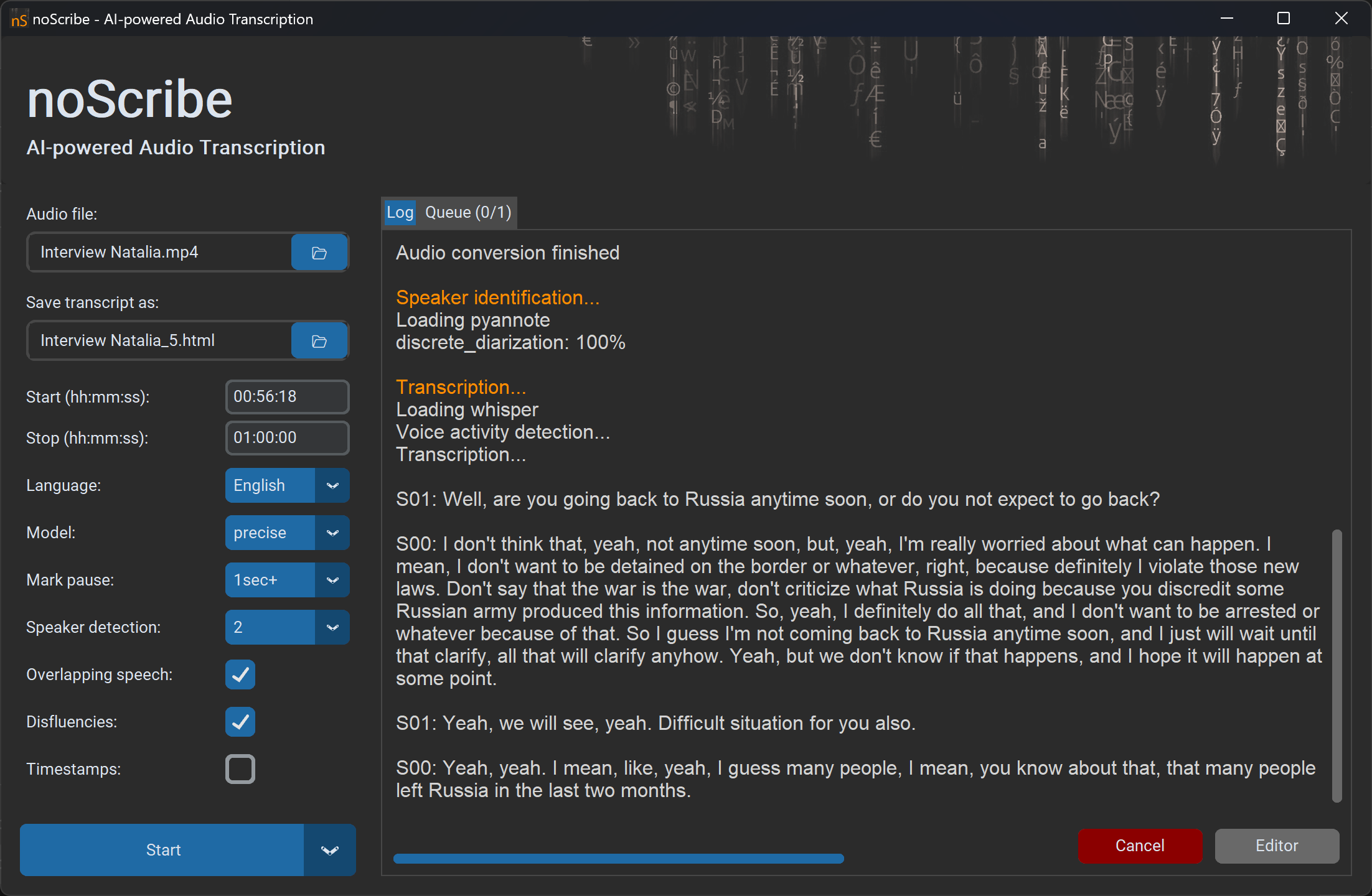
Como Funciona na Prática
O processo é direto:
- Carregue um arquivo de áudio ou vídeo (suporta quase todos os formatos)
- Selecione um idioma (ou deixe a detecção automática ativada)
- Configure as opções:
- Precisão do reconhecimento
- Detecção de pausas
- Identificação de falantes
- Inicie o processamento
- Revise o resultado no editor integrado
Nota importante: a qualidade da gravação afeta diretamente os resultados. Um bom microfone e mínimo ruído de fundo reduzirão significativamente os erros.
Interface do Editor
O editor oferece ferramentas convenientes para revisão:
- Sincronização de texto com áudio (Ctrl+Space)
- Ajuste da velocidade de reprodução
- Capacidade de marcar sobreposição de falas
- Exportação para formatos compatíveis com sistemas populares de análise (MAXQDA, ATLAS.ti)
Limitações e Considerações
- Requisitos de hardware — é necessário um computador moderno para uso confortável (em máquinas mais fracas, o processamento pode levar até 3 vezes a duração da gravação)
- Tamanho da distribuição — cerca de 3,7 GB devido aos modelos de IA
- Precisão não perfeita — especialmente com sotaques complexos ou ruído de fundo
- Suporte experimental para fala com múltiplas linhas de conversa
Para Quem É Mais Útil?
- Pesquisadores em métodos qualitativos em sociologia e psicologia
- Jornalistas que trabalham com materiais baseados em entrevistas
- Estudantes que trabalham com fontes orais
- Podcasters para criar versões em texto dos episódios
Alternativas
Se o NoScribe não funcionar para você por qualquer motivo, considere:
- QualCoder — uma ferramenta aberta para análise de dados qualitativos
- Taguette — outra solução para trabalho de pesquisa
O NoScribe é um exemplo raro de interface amigável para tecnologias complexas de reconhecimento de fala. O projeto é particularmente valioso por seu foco em privacidade (todos os dados permanecem no seu computador) e sua licença aberta GPL-3.0. Embora você não possa eliminar completamente a revisão manual da transcrição, a ferramenta reduz esse trabalho significativamente.
Para quem trabalha regularmente com fontes orais, o NoScribe pode se tornar um verdadeiro salvavidas. E a capacidade de contribuir com o projeto (é totalmente open source) o torna especialmente atraente para usuários conhecedores de tecnologia.
Projetos relacionados