Vision for pet projects without buying a GPU cluster
Every time you need to add image recognition or photo-based Q&A to a project, your hands reach for cloud APIs. But paying for each OpenAI call or routing requests through third-party services isn't always desirable. Running a heavy multimodal model locally isn't easy either: most open-source solutions require GPUs with 24 GB of memory or more.
Repository moondream solves exactly this problem. Developers from m87-labs assembled a compact multimodal model that confidently parses images while weighing just a few gigabytes and runs smoothly even on modest hardware.
What moondream can do
The model takes an image along with a text query as input and returns a meaningful response in natural language. The repository contains two versions:
- moondream 2B with two billion parameters for standard tasks, including caption generation, visual question answering, and object detection
- moondream 0.5B with 500 million parameters, compressed via distillation for running on smartphones, single-board computers, and microservices with minimal RAM consumption
Here are a couple of examples from the repository:

If you ask the model what the person in the photo is doing, it will answer: "The girl is sitting at a table and eating a large hamburger". When asked about hair color, it clearly specifies that they are white.
The second example shows a more detailed breakdown of the environment:
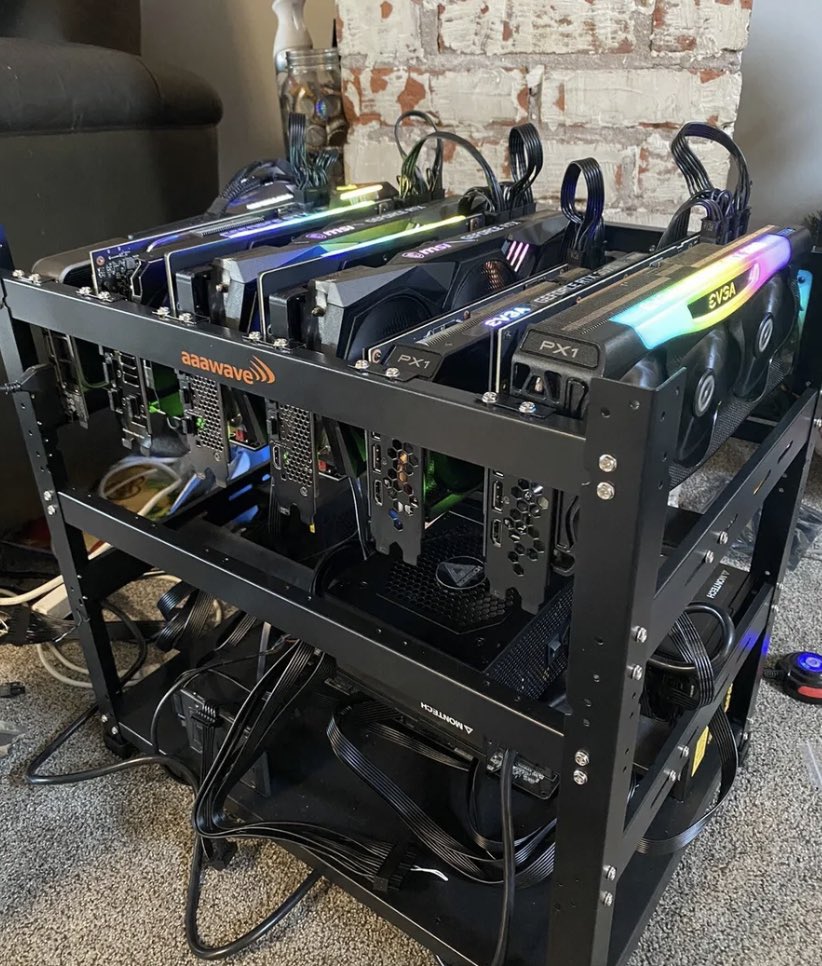
When asked "What is this?", moondream produces a detailed paragraph: it recognizes the server rack, notes the connected power cables, carpet on the floor and a nearby sofa, as well as the brick wall in the background.
How to run locally
The model is written in Python and integrates into projects in just a dozen lines of code. Basic inference requires only standard Hugging Face libraries.
from PIL import Image
from transformers import AutoModelForCausalLM, AutoTokenizer

model_id = "vikhyatk/moondream2"
revision = "2024-08-26"

model = AutoModelForCausalLM.from_pretrained(
    model_id,
    trust_remote_code=True,
    revision=revision
)
tokenizer = AutoTokenizer.from_pretrained(model_id, revision=revision)

image = Image.open("photo.jpg")
enc_image = model.encode_image(image)

answer = model.answer_question(enc_image, "Describe this image in detail.", tokenizer)
print(answer)
The 0.5B version runs even on bare CPU without critical delays. If local resources aren't available at all, the authors have prepared deployment examples via the serverless platform Modal.
Where this comes in handy in practice
The small size opens up scenarios where large models simply don't fit the budget or latency requirements:
- Automatic tagging and captioning in local media archives.
- Content moderation in bots and web forms directly on the application server.
- Robotics and DIY devices based on Raspberry Pi, where there's no access to stable internet.
- Fast image filtering before sending to heavier post-processing.
Of course, you shouldn't expect a half-billion parameter model to understand complex infographics or read handwritten text. But for basic image navigation and scene description, moondream performs excellently.
If you need a fast and lightweight VLM module that won't break the bank on servers and will run even on a laptop, moondream definitely deserves testing in a sandbox. You can try the model in the browser on the project's official website in the Playground section.
Related projects